
Overview
Healthcare · Academic project
TrialBridge
Clinical trial discovery with clarity and patient control.
- Role
- Product Designer
- Team
- Six-person team
- Collaboration
- Mayo Clinic physicians & academic faculty
- AI Involvement
- Design: Lovable for the full low-fidelity prototype.
Product: trial suggestions and educational assistant; concepts only.
My contribution
Owned key onboarding flows; contributed trial comparison and caregiver controls; led education, FAQs and the assistant concept; proposed peer connection requests.
I contributed affinity mapping and physician-feedback refinements. Research synthesis, testing, product direction and system decisions were shared team work.
Problem
A medical match is only part of the decision.
Patients also need to understand the information, manage practical constraints, and choose who participates.
- Understand the trial
- Unfamiliar language and fragmented details explanation and aligned comparison.
- Judge practical fit
- Travel and visit requirements preferences alongside medical context.
- Control participation
- Caregiver access and peer messaging patient permissions and approval.
Research foundation Literature review, affinity mapping and recurring physician collaboration, including three think-aloud rounds. Real patients were not tested.
Decisions
Four decisions along the patient journey.
- Provide context
- Explore suggestions
- Compare options
Patient-controlled support throughout
01/04Onboarding
Offer record sync without requiring it.
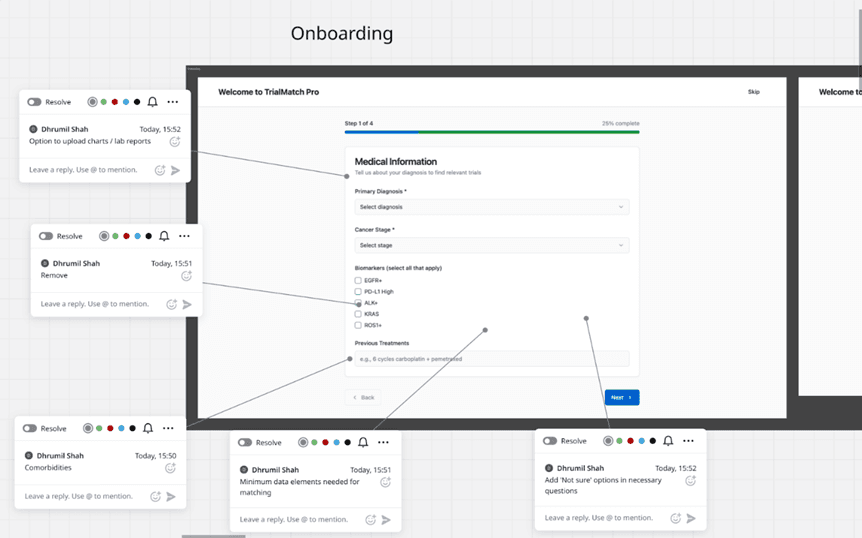
Physicians questioned onboarding depth in rounds 1 and 3. The team explored EHR sync alongside manual entry; I owned key onboarding flows.
Earlier exploration
Revised entry point
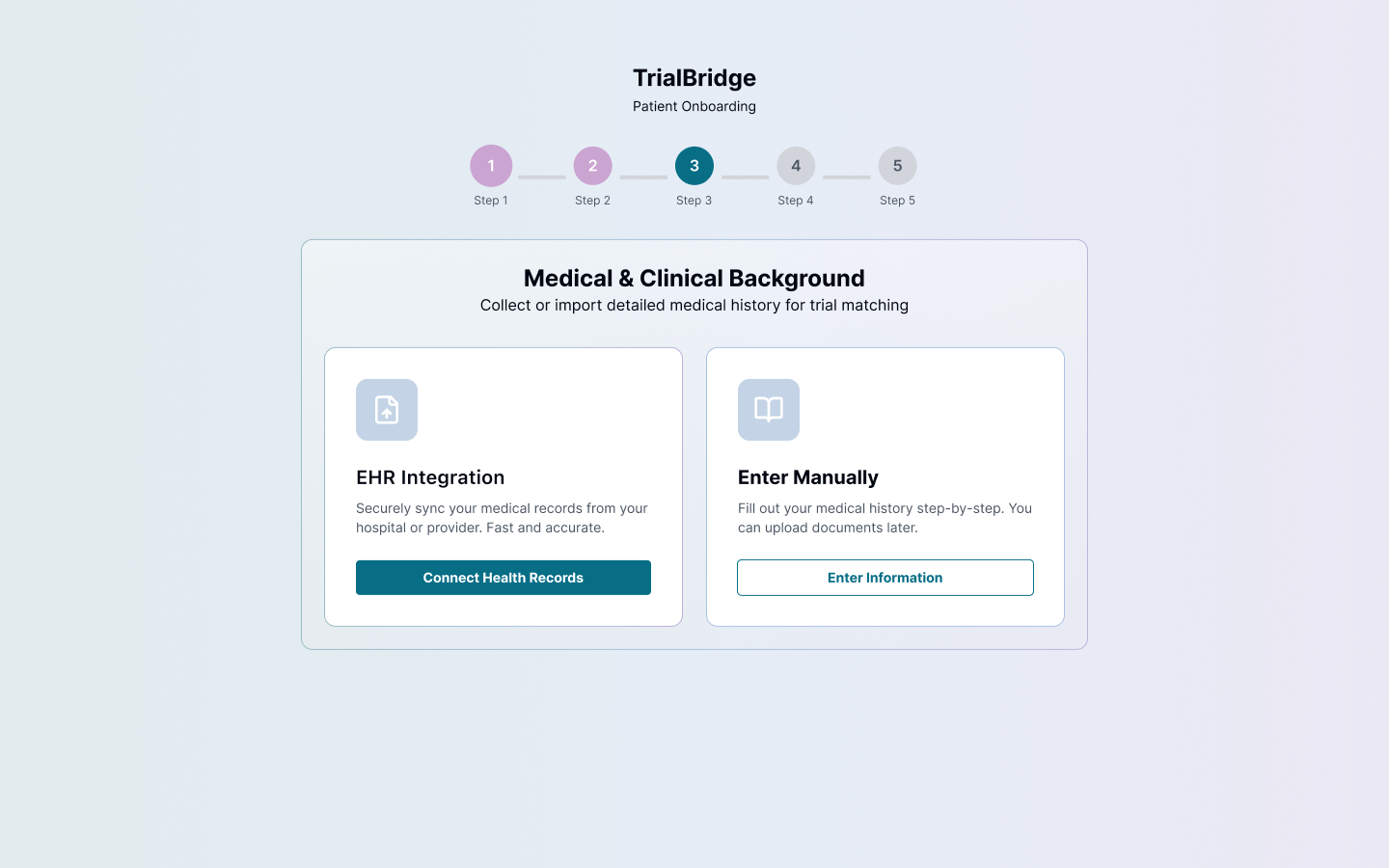
Practical fit Focused medical-entry steps and travel/visit preferences supplement the medical profile.
02/04Discovery
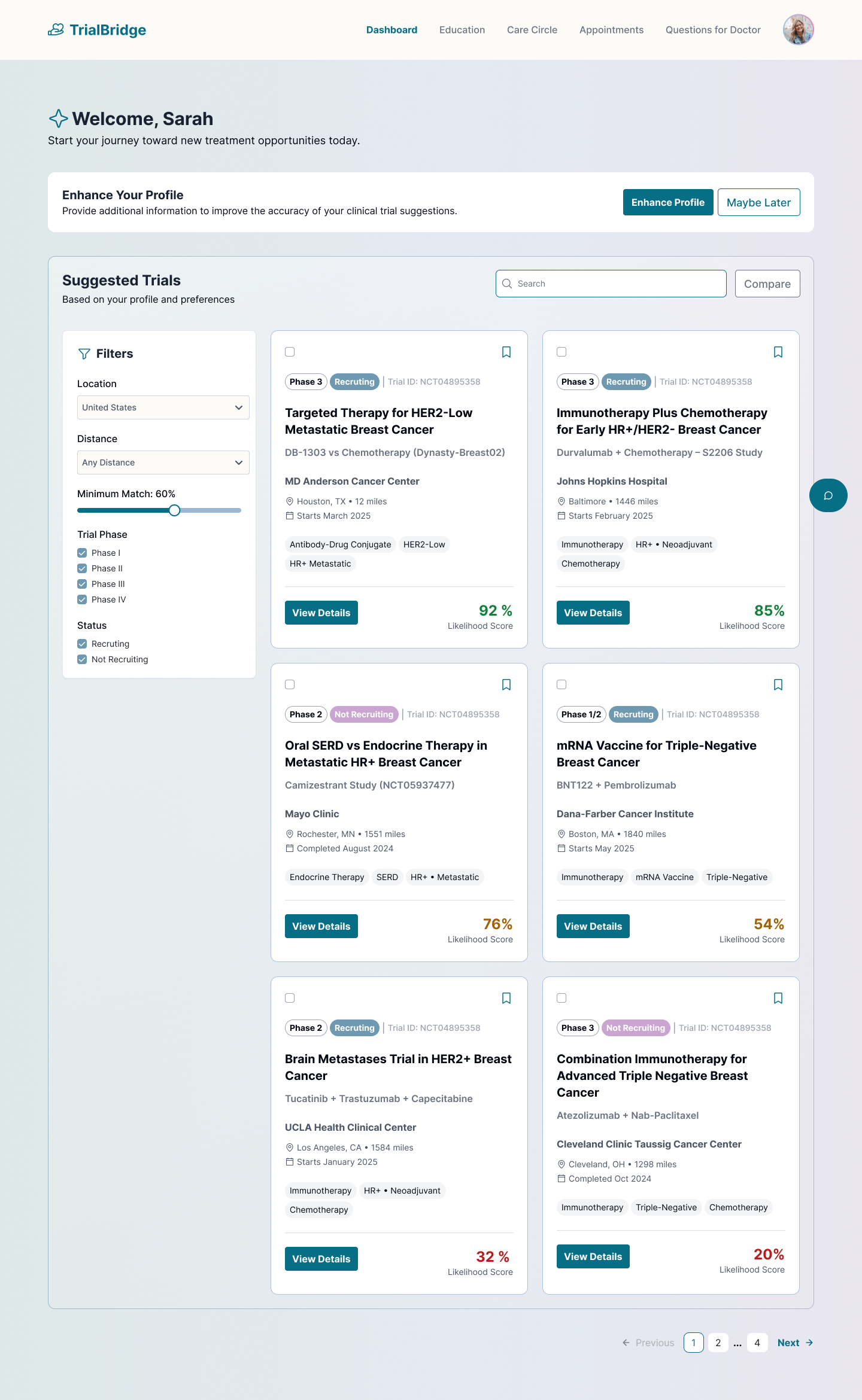
Suggest a possibility, not clinical certainty.
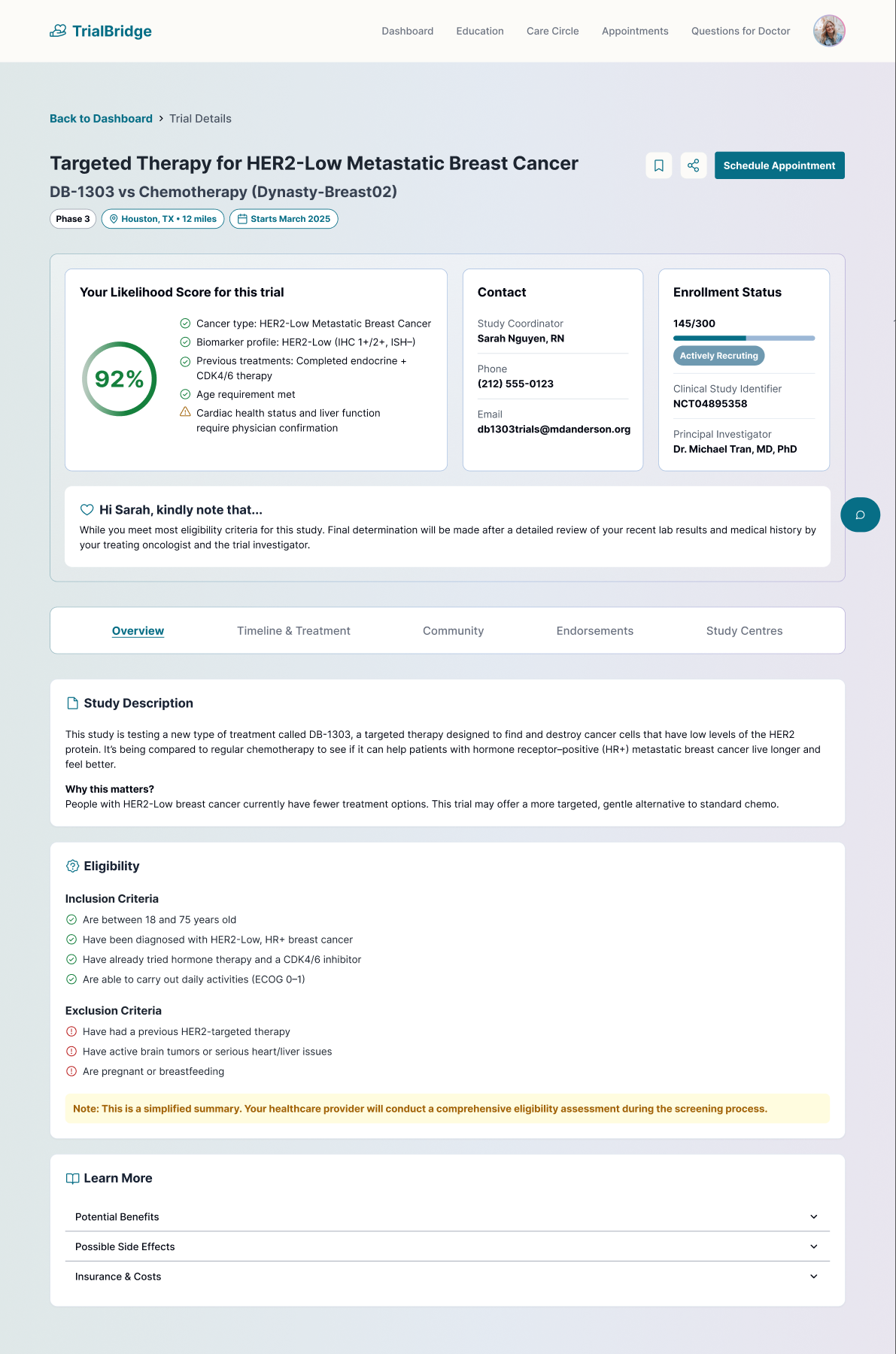
Round 2 physician feedback challenged the certainty implied by “Matching.” The team changed the label and kept clinician review visible in trial details.
Matching Trials
Suggested Trials
03/04Comparison
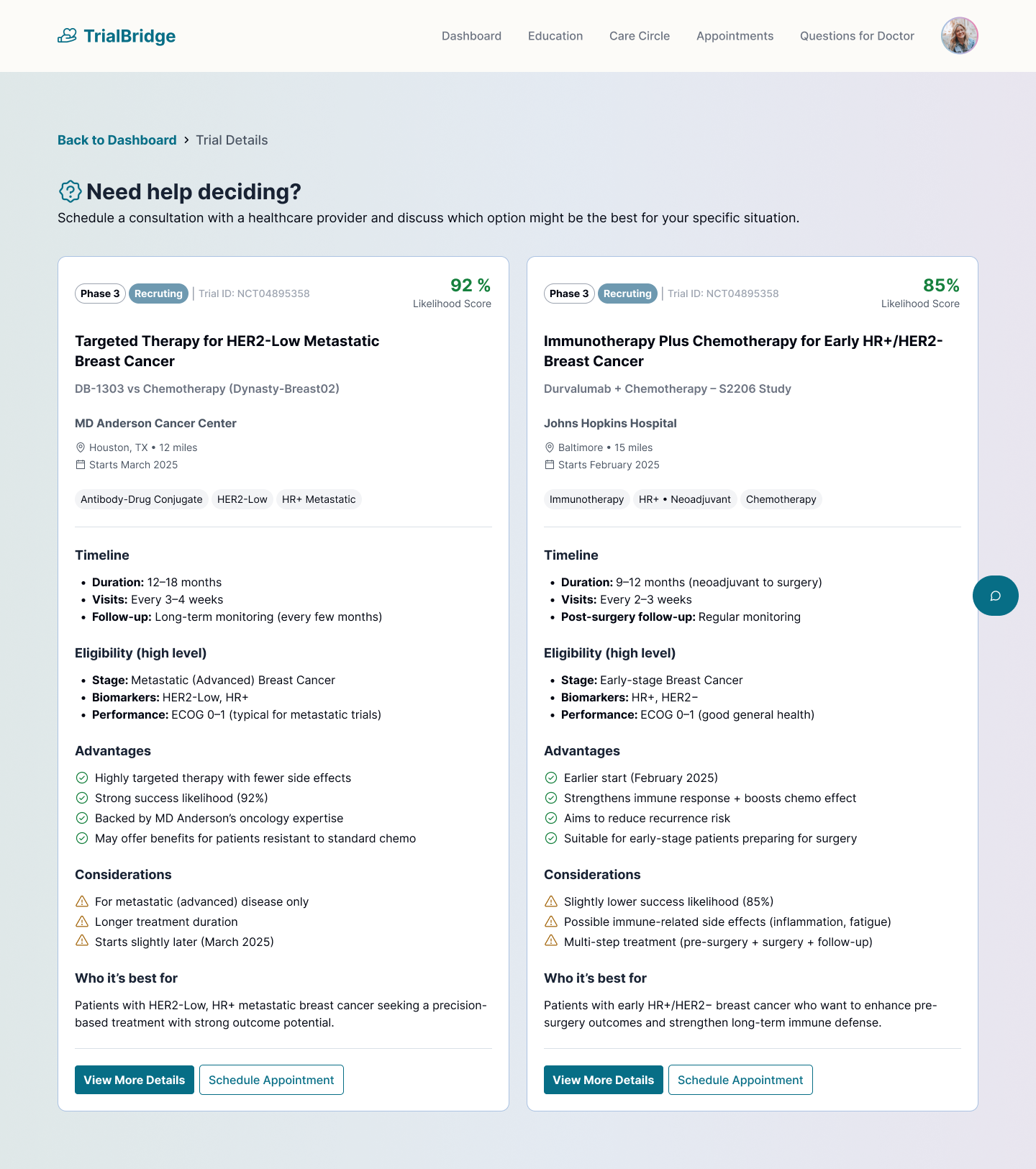
Compare the differences in one place.
I worked on side-by-side comparison, aligning timelines, visit frequency and eligibility considerations so patients could inspect differences without relying on memory.
04/04Support throughout the journey
Let patients choose who sees what.
Physicians raised unwanted messaging in round 1 and privacy concerns in later feedback. I proposed peer connection requests and worked on Care Circle interactions; the team refined caregiver sharing controls.
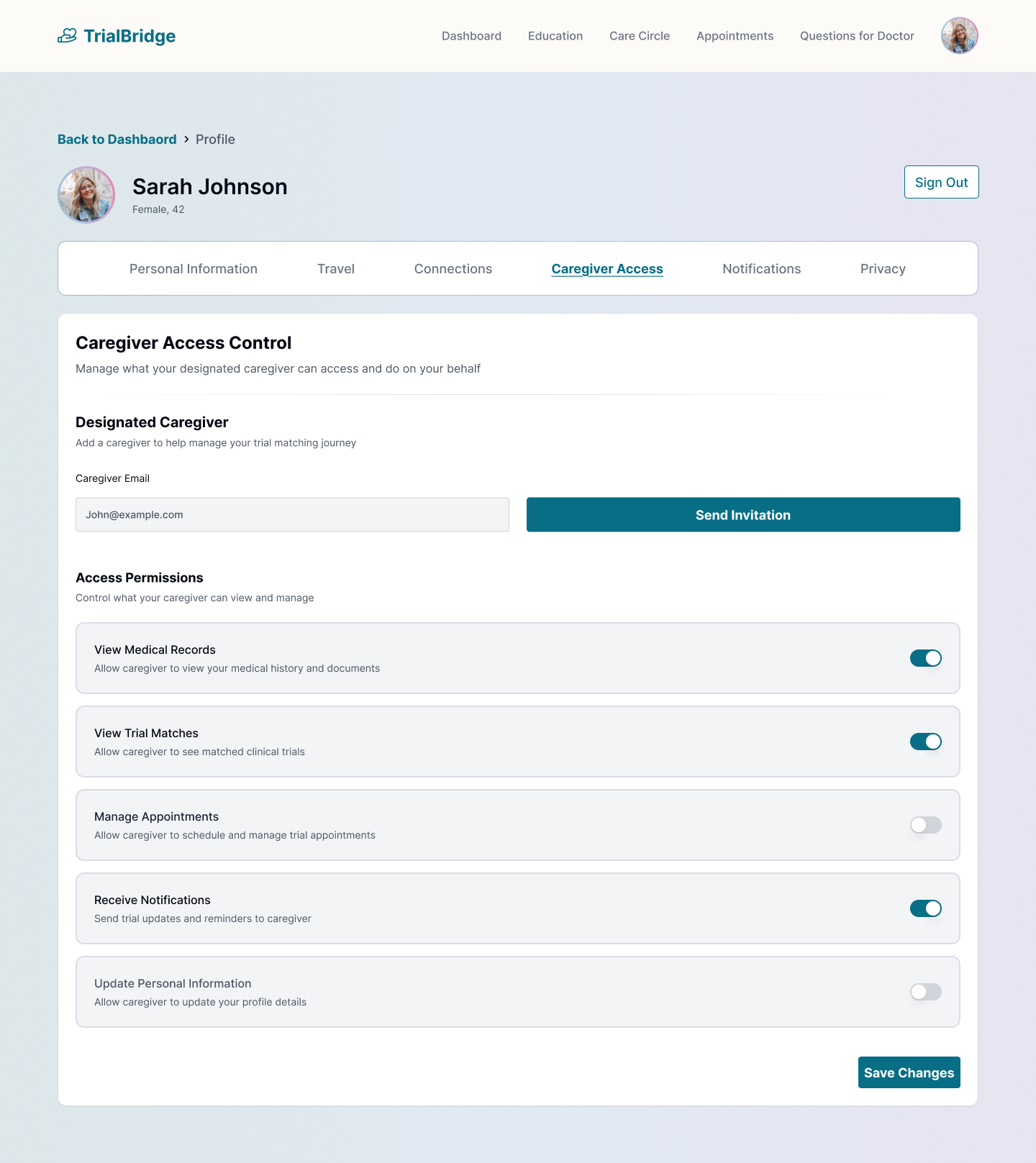
Patient control Caregiver permissions govern access and actions; peer requests require approval. Care Circle also explored assigned tasks.
Impact
Verified delivery. Physician-informed refinement.
- 35+
- Screens delivered by the team
- 3
- Physician think-aloud rounds
- 4
- Physicians per session
What changed
More cautious suggestion language, clearer participation controls, and continued onboarding refinement. Suggestion accuracy remained an open concern after round 3.
What remains unmeasured
Patient comprehension, enrollment and clinical effectiveness. Delivery and testing counts describe activity, not measured product impact.
Scope judgment
A clinician dashboard and broader physician/EHR hub were explored but not adopted because they required many supporting features. Selected elements informed the final concept.
Physician collaboration taught me to balance clarity, clinical accuracy and patient control. Direct patient research would be the next step toward evaluating the experience.
Explore the high-fidelity design file